Water Bath for Cheesecake: Why and How to Use One
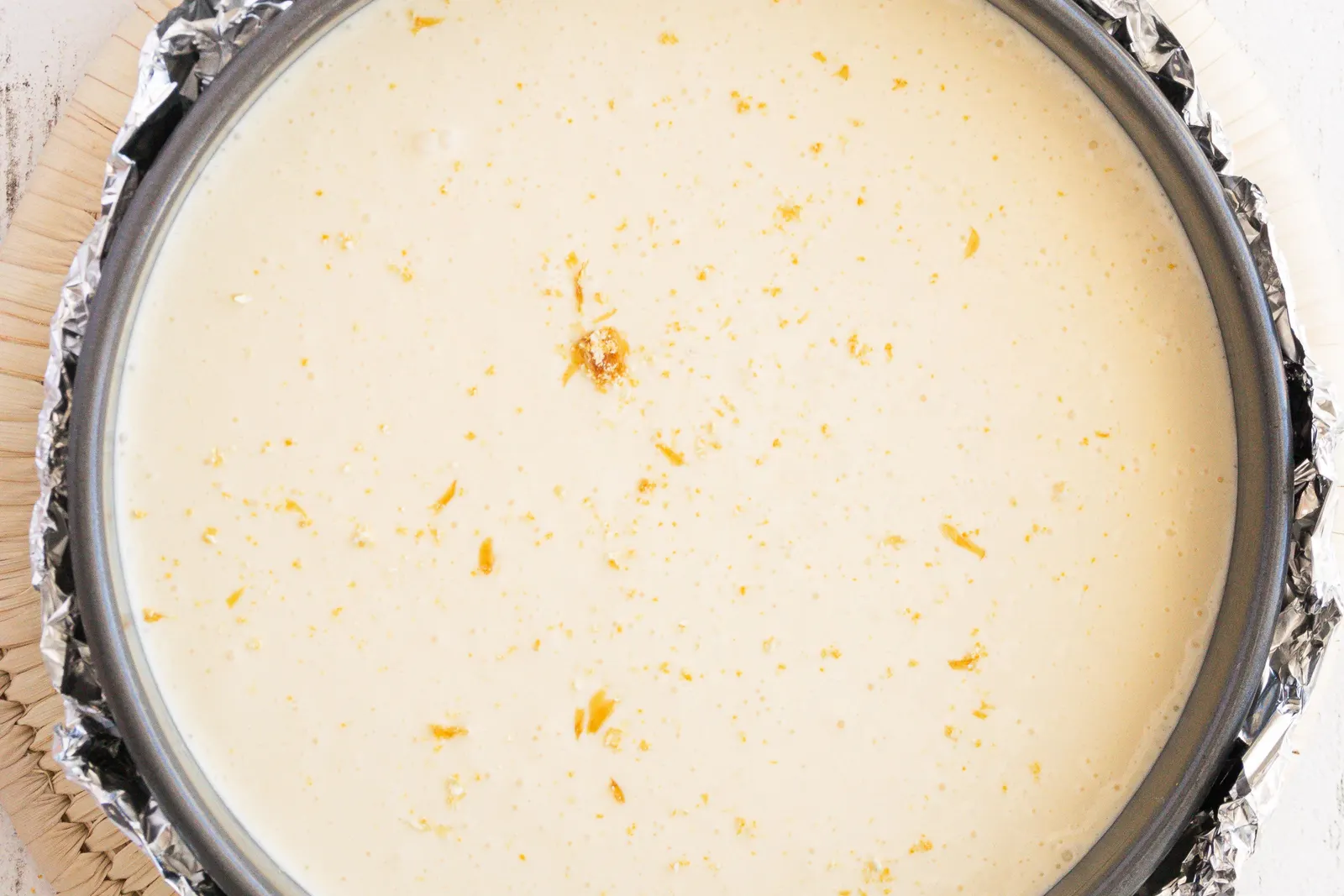
A water bath (sometimes called a bain-marie) is a pan of hot water that a cheesecake bakes inside, rather than directly on the oven rack. It's one of the most effective ways to prevent cracking and uneven baking, and the setup is simpler than it sounds.
Why a Water Bath Works
A cheesecake is essentially a custard — it's egg-thickened and sets through gentle, even heat, much like a creme brulee. Direct oven heat is drier and less even, which raises the risk of overbaking the edges before the center sets, and the resulting temperature difference across the cheesecake is part of what causes cracking.
A water bath surrounds the pan with moist heat that stays close to 212°F (the boiling point of water) no matter how hot the oven itself is set, which bakes the cheesecake more gently and evenly from edge to center.
How to Set Up a Water Bath
The main risk is water leaking into the springform pan through its seams, so a secure wrap matters more than anything else in the setup.
- 1. Wrap the outside of your springform pan tightly in 2–3 layers of heavy-duty aluminum foil, bringing the foil up the sides and folding it securely at the top to seal out water. A slow cooker liner bag or oven bag around the pan adds extra insurance.
- 2. Place the wrapped pan inside a larger roasting pan.
- 3. Pour the cheesecake batter into the springform pan as usual.
- 4. Place the roasting pan (with the cheesecake pan inside it) on the oven rack, then carefully pour hot water into the roasting pan until it reaches about halfway up the sides of the springform pan.
- 5. Bake as directed in your recipe, checking for the usual doneness signs (set edges, a gentle jiggle in the center).
- 6. Carefully remove the whole setup from the oven, then lift the cheesecake pan out of the water bath before cooling.
Common Water Bath Problems
A few things that commonly go wrong, and how to avoid them:
- Water leaking into the pan: usually a foil-wrapping issue — use wider, heavy-duty foil and overlap the sheets generously, or add an oven bag as a second layer.
- Soggy crust: this points to a foil leak rather than the water bath method itself; double-check the wrap before the next bake.
- Water spilling while moving the pan into the oven: pour the water in after the roasting pan is already on the oven rack, rather than carrying a full pan of hot water across the kitchen.
Frequently Asked Questions
A water bath's entire job is to replace dry, uneven oven heat with gentle, even, moist heat — and that difference genuinely shows up in a smoother, less crack-prone cheesecake. The setup takes a few extra minutes but isn't difficult once you've done it once.
Cheesecakes, Cupcakes & Mini Cakes walks through water bath setup alongside classic, no-bake, and burnt-style cheesecake recipes.
See Cheesecakes, Cupcakes & Mini CakesRelated Articles
Why Does Cheesecake Crack? Causes and How to Prevent It
A cracked cheesecake almost always traces back to one of four things: too much time in the oven, cooling too fast, too much air in the batter, or sticking to the pan. Here's how to prevent each one.
New York Cheesecake vs No-Bake Cheesecake: What's the Difference
Both are called cheesecake, but they're built completely differently — one is an egg-set baked custard, the other sets entirely through chilling. Here's how to choose between them.
How to Make Basque Burnt Cheesecake at Home
No crust, no water bath, and a deliberately scorched top — Basque cheesecake breaks nearly every rule of a classic cheesecake, and that's exactly the point. Here's how to make one.