How to Fill Piping Bags and Pipe Cupcake Frosting Like a Bakery
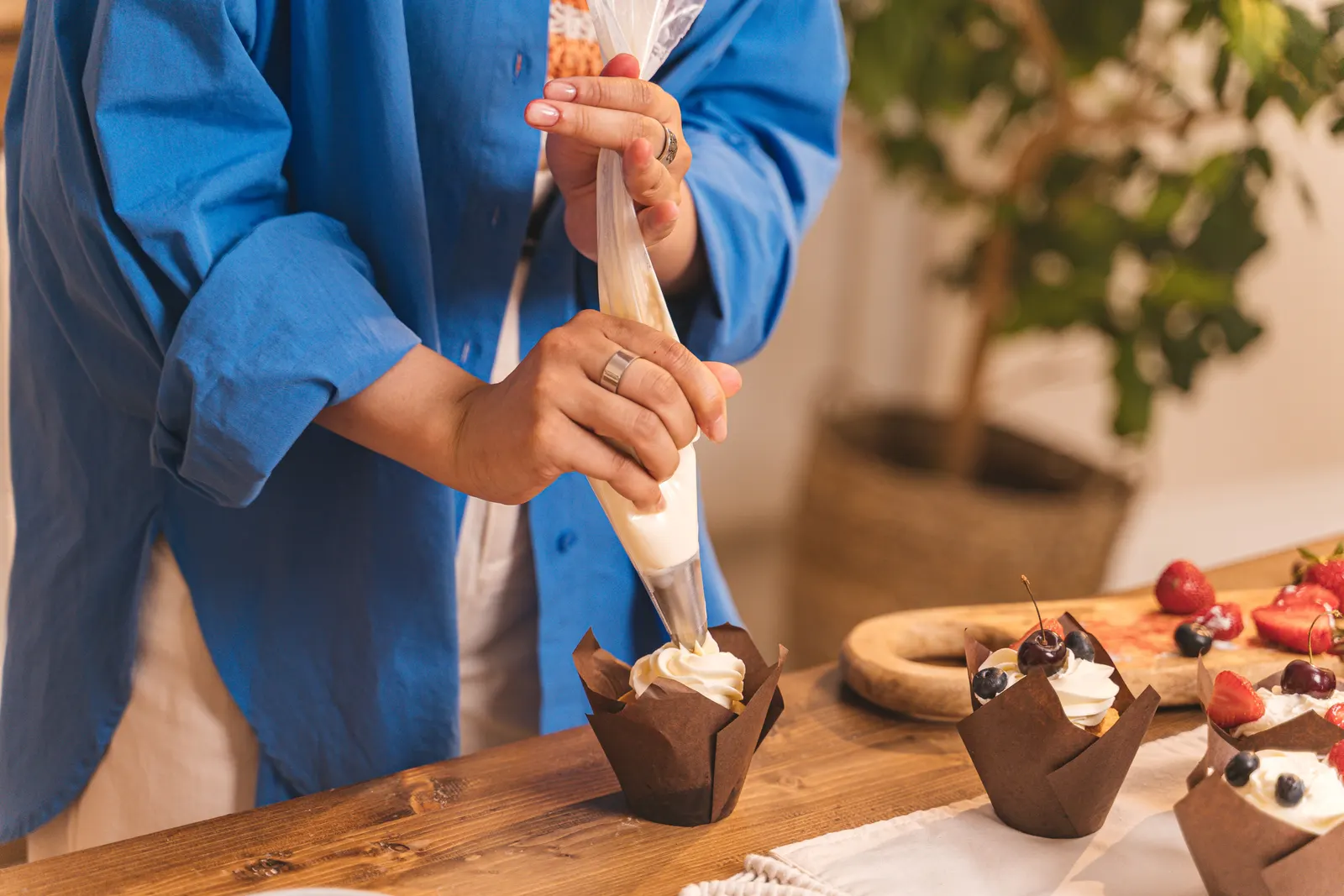
A neat, tall swirl of frosting is one of the more satisfying beginner decorating skills to learn, and it comes down to three things: frosting that's the right consistency, a piping bag filled correctly, and steady, even pressure. None of it requires advanced technique.
Getting the Frosting Right
Frosting that's too soft won't hold its shape and will slump; frosting that's too stiff is hard to pipe and can tear. Buttercream at room temperature, beaten until smooth and fluffy, is usually the right consistency — if it feels loose, chill it for 10–15 minutes before piping.
Filling a Piping Bag
A loaded piping bag is easier to control than it looks once you've set it up correctly.
- 1. Fit a piping tip (a large open star tip, like a 1M or 2D, gives the classic swirl look) into the bag, trimming the bag's point if needed so the tip sits snugly.
- 2. Fold the top of the bag down over your hand like a cuff, so the bag opens wide and doesn't collapse while you fill it.
- 3. Use a spatula to fill the bag about two-thirds full — overfilling makes it harder to control and more likely to burst at the seam.
- 4. Unfold the cuff, then twist the top of the bag to push the frosting down toward the tip and squeeze out any trapped air.
Piping the Swirl
Hold the bag at a 90-degree angle, straight above the center of the cupcake, with the tip just above the surface.
- 1. Apply steady, even pressure and start piping a circle around the outer edge of the cupcake.
- 2. Keep piping inward in a continuous spiral, slightly overlapping each ring.
- 3. As you reach the center, ease off the pressure gradually and lift the bag straight up to finish with a small peak.
- 4. Keep your hand moving at a steady pace — stopping and starting mid-swirl is what usually causes uneven rings.
Frequently Asked Questions
A clean cupcake swirl is a consistency-and-consistency problem — frosting consistency and consistent hand pressure — more than a matter of special skill. A few practice swirls on a plate before you commit to a batch of cupcakes makes a real difference.
Cheesecakes, Cupcakes & Mini Cakes includes full piping and frosting technique lessons alongside its recipes.
See Cheesecakes, Cupcakes & Mini CakesRelated Articles
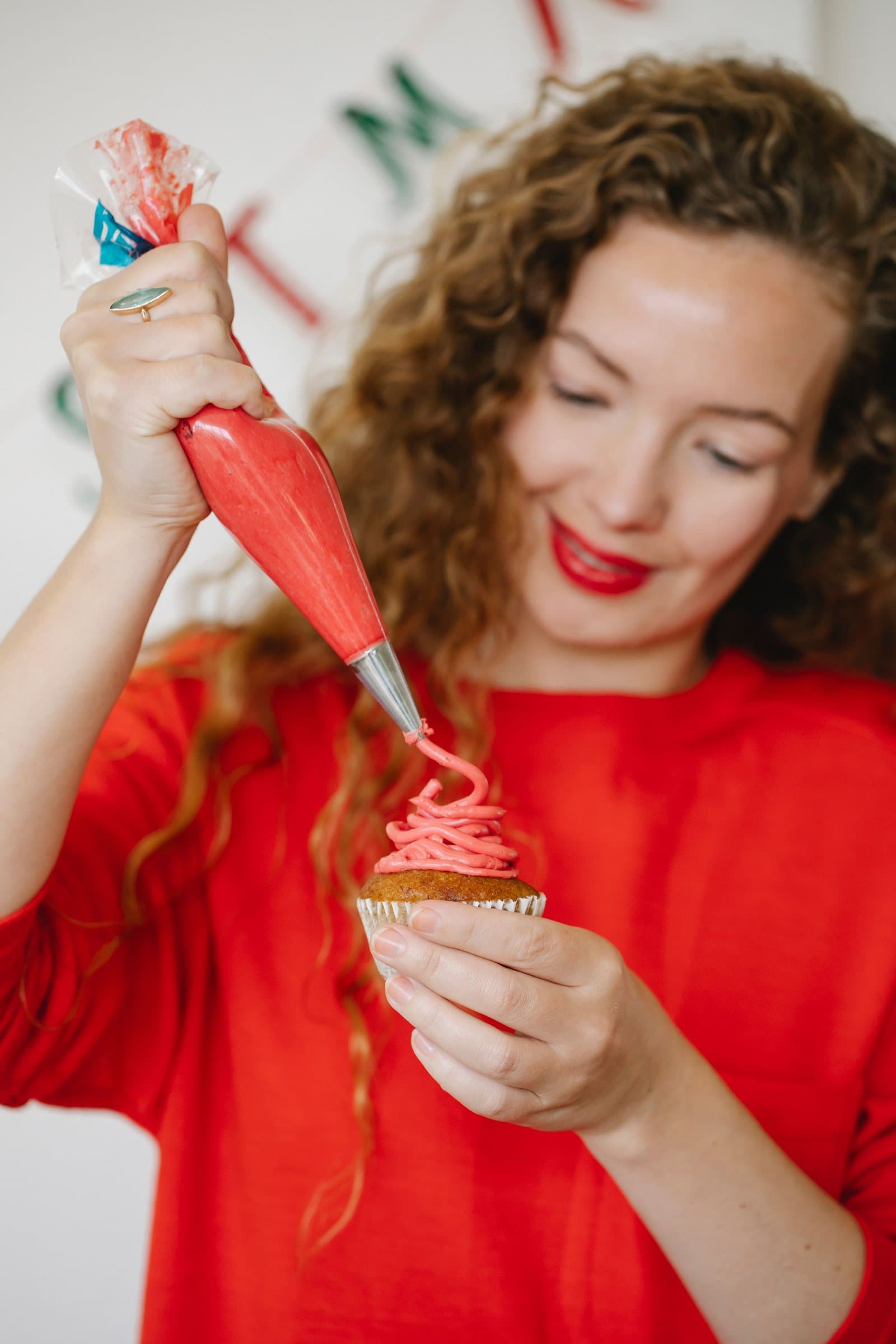
How to Make Buttercream Frosting: Consistency, Flavor, and Troubleshooting
A full buttercream recipe with exact measurements, how to adjust it for spreading versus piping, real flavor variations, and what to do if it turns out grainy, soupy, or too stiff.
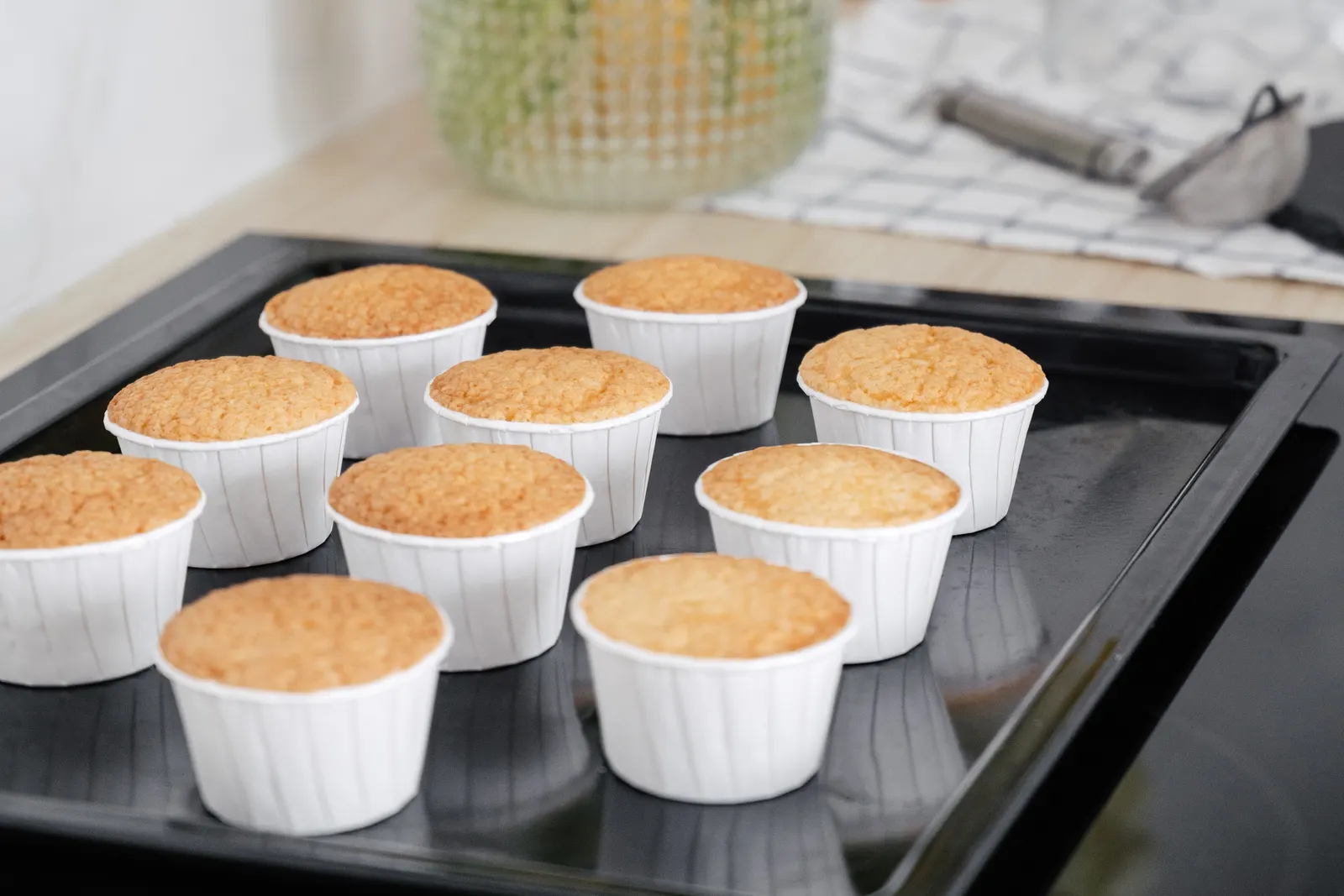
Why Do Cupcakes Sink in the Middle? Causes and Fixes
A cupcake that rises nicely and then collapses in the center usually comes down to one of five causes, most of them simple to fix. Here's how to find yours.
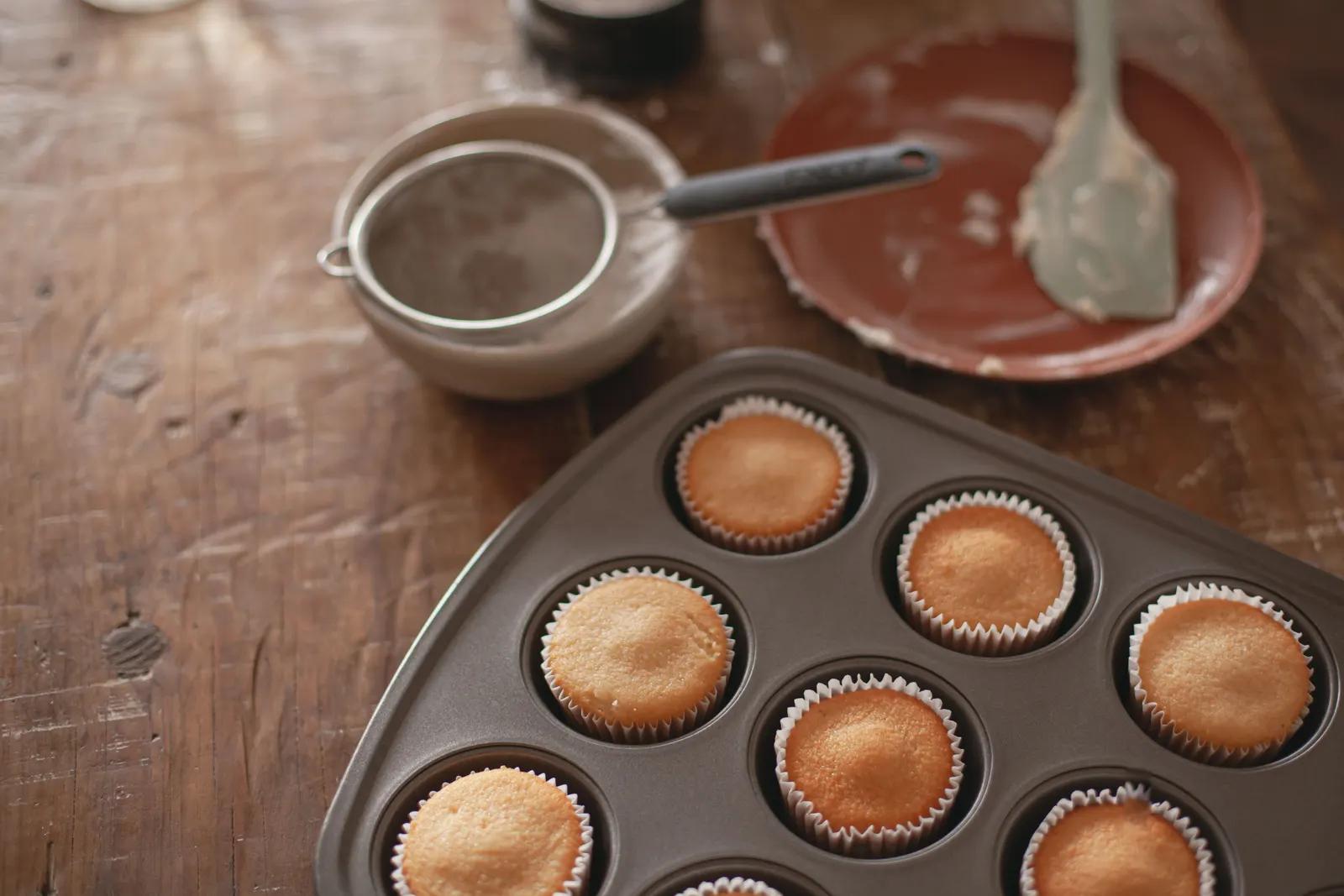
Cupcake Liners Sticking to Wrappers? Why It Happens and How to Fix It
Peeling a cupcake liner and leaving half the cupcake behind is a common, fixable problem — usually down to liner quality, recipe fat content, or how soon you tried to peel it.