How to Make Bakery-Style Cupcakes with Soft, Even Crumbs
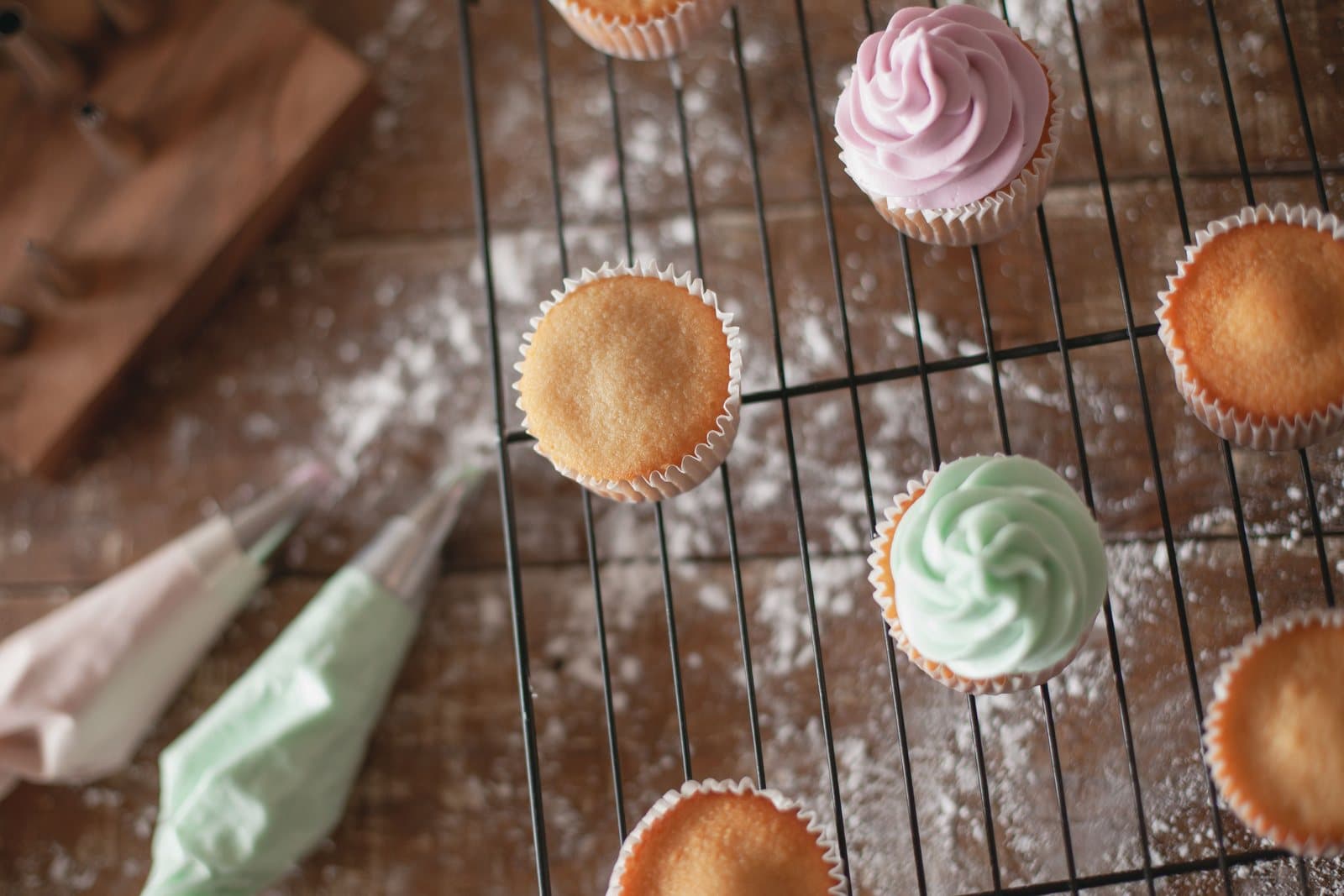
Bakery cupcakes tend to have two things home versions often miss: a soft, even crumb with no dense ring around the edges, and tops that are uniformly domed rather than lopsided or sunken. Both come down to portioning and baking technique more than any secret ingredient.
Below is a full vanilla cupcake recipe, followed by the specific portioning and baking details that close the gap between a home bake and a bakery one.
Bakery-Style Vanilla Cupcakes
Prep time: 15 minutes. Bake time: 18–20 minutes. Pan: 12-cup muffin tin with paper liners. Oven temperature: 350°F / 175°C. Yield: 12 cupcakes.
- 1 3/4 cups (220g) all-purpose flour
- 1 cup (200g) granulated sugar
- 1/2 cup (113g) unsalted butter, softened
- 2 large eggs, room temperature
- 3/4 cup (180ml) whole milk, room temperature
- 2 tsp baking powder
- 1/4 tsp salt
- 2 tsp vanilla extract
Method
- 1. Heat the oven to 350°F/175°C and line a muffin tin with paper liners.
- 2. Whisk the flour, baking powder, and salt together.
- 3. Beat the butter and sugar on medium-high for 2–3 minutes, until pale and fluffy.
- 4. Add the eggs one at a time, beating well after each, then beat in the vanilla extract.
- 5. With the mixer on low, alternate adding the flour mixture and milk, starting and ending with the flour mixture, mixing just until combined after each addition.
- 6. Divide the batter evenly among the liners (see portioning notes below), filling each about two-thirds full.
- 7. Bake 18–20 minutes, until a toothpick comes out clean and the tops spring back when lightly pressed.
- 8. Cool in the tin for 5 minutes, then transfer to a wire rack to cool completely before frosting.
How to Portion Batter Evenly
Uneven cupcakes — some overflowing, some short — almost always come down to inconsistent portioning rather than the recipe itself. A spring-loaded ice cream scoop (about 3 tablespoons, or a #16 scoop if you're matching equipment to a specific size) gives consistent portions much faster than eyeballing with a spoon. Fill each liner to roughly the same level, about two-thirds full — overfilled liners spread outward over the tin and get a flat, misshapen top; underfilled ones bake flat with no real dome at all.
Why Cupcakes Get a Dense Ring Around the Edge
This specific texture problem — a tender center with a noticeably denser, tougher band just inside the paper liner — is almost always overmixing once the flour is added. Beating on low and stopping as soon as the last streaks of flour disappear (rather than continuing until the batter looks perfectly uniform) is what prevents it.
Reading Doneness Without Overbaking
Cupcakes bake fast, and even a minute or two past done can noticeably dry them out, more so than it would a full-sized cake layer, because of their smaller size relative to surface area. Start checking at the 16-minute mark: the tops should spring back lightly when touched, and a toothpick inserted in the center should come out clean or with only the lightest crumbs. Pull them as soon as that happens rather than waiting for the full bake time listed.
Finishing Them Bakery-Style
A generous, piped swirl reads as more finished than a flat spread of frosting, even using a similar total amount — pipe in a tall spiral with a large round or star tip, starting from the outer edge and working inward and up. See how to make buttercream frosting for a full recipe and piping-consistency guidance, and how to decorate a cake at home for additional topping ideas like a simple drip or fresh fruit.
Frequently Asked Questions
Bakery-style cupcakes come down to consistent portioning, mixing just until combined, and pulling them the moment they pass the doneness check — none of it requires special equipment beyond a decent scoop and a toothpick.
Cheesecakes, Cupcakes & Mini Cakes includes 16 cupcake recipes spanning chocolate, vanilla, and fruit bases, plus filled and decorated variations.
See Cheesecakes, Cupcakes & Mini CakesRelated Articles
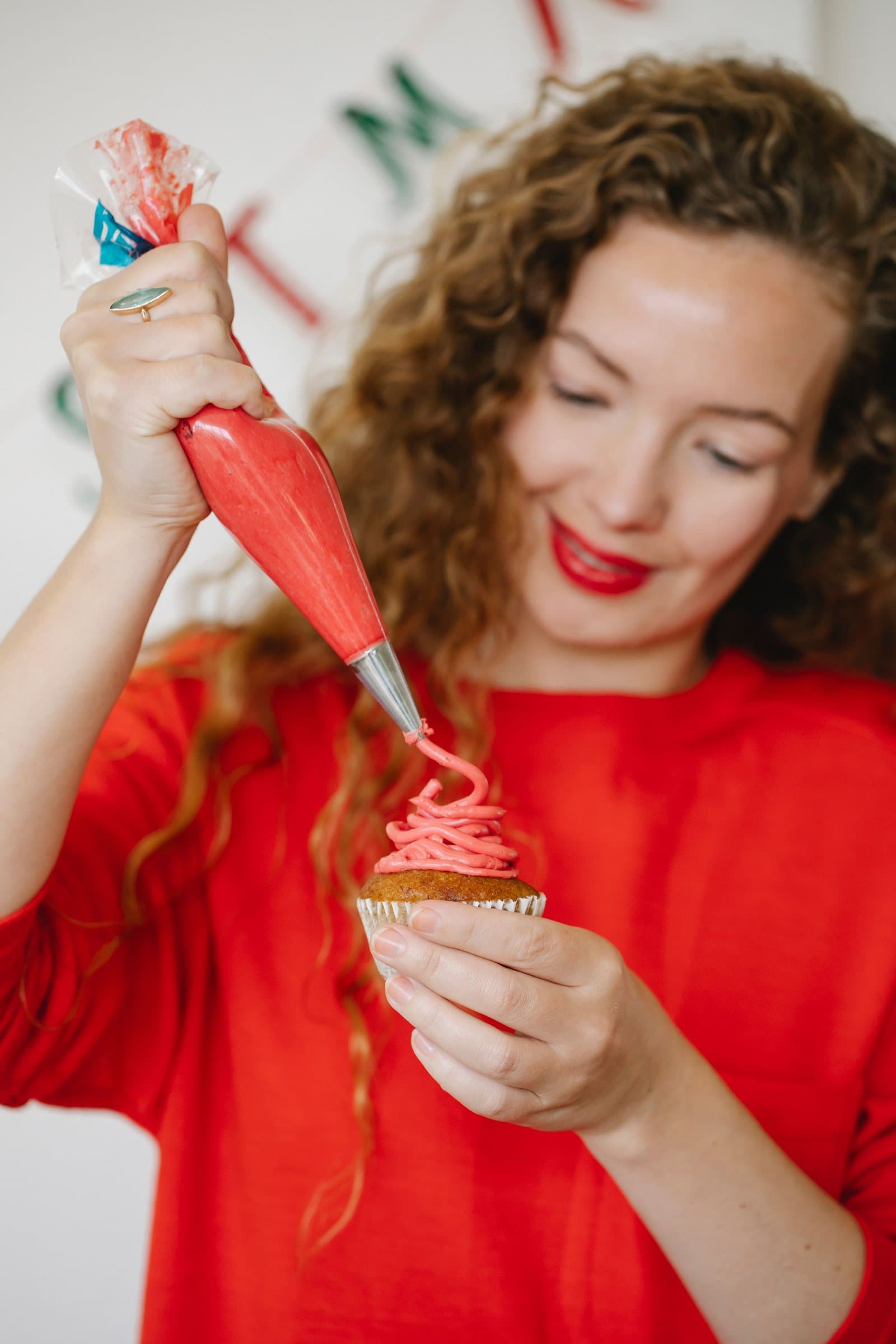
How to Make Buttercream Frosting: Consistency, Flavor, and Troubleshooting
A full buttercream recipe with exact measurements, how to adjust it for spreading versus piping, real flavor variations, and what to do if it turns out grainy, soupy, or too stiff.
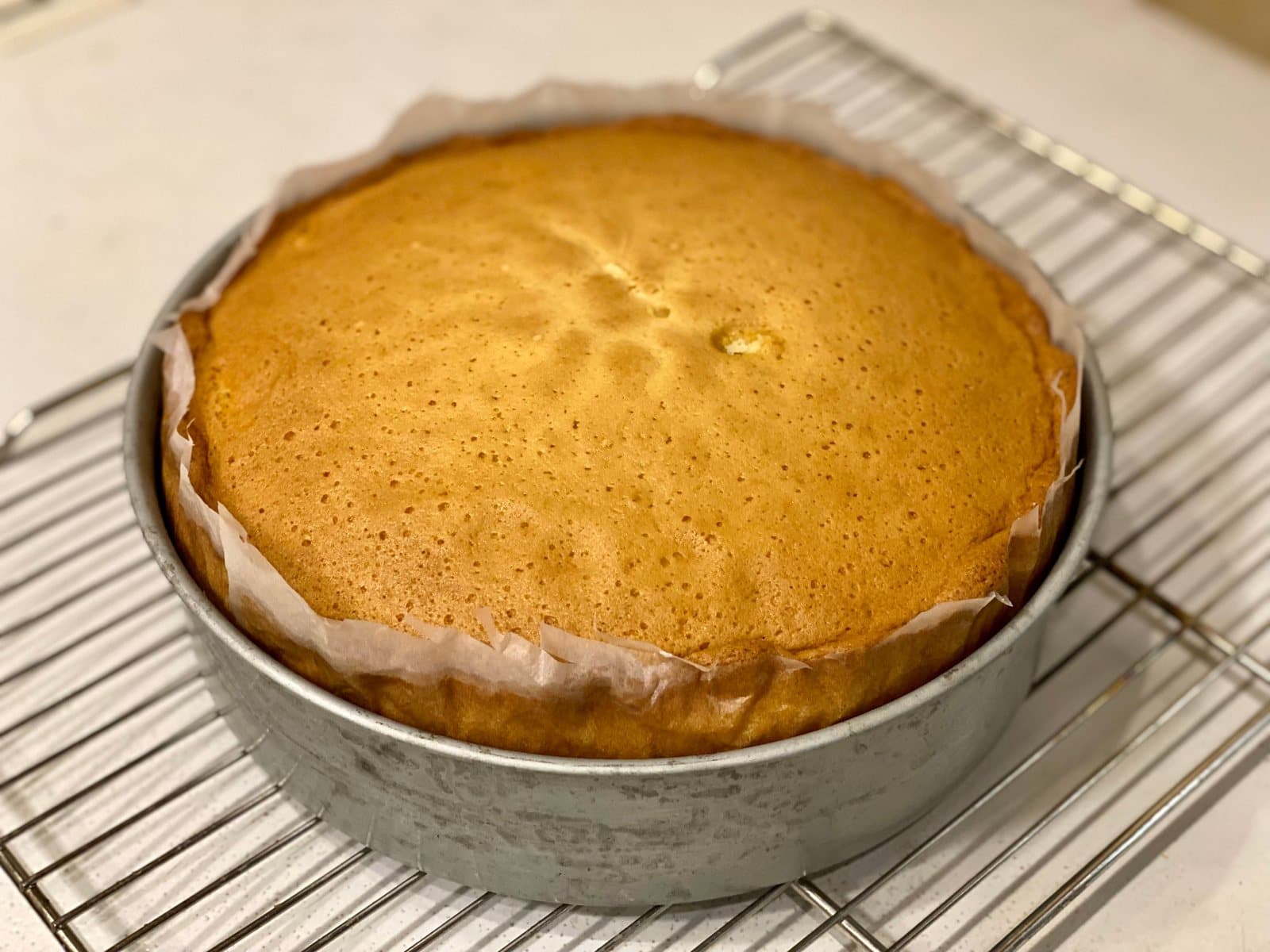
Why Does My Cake Sink in the Middle? 9 Common Causes and Fixes
A cake that sinks in the middle has a specific, findable cause — almost always one of nine things. Here's how to work out which one happened and what to change next time.
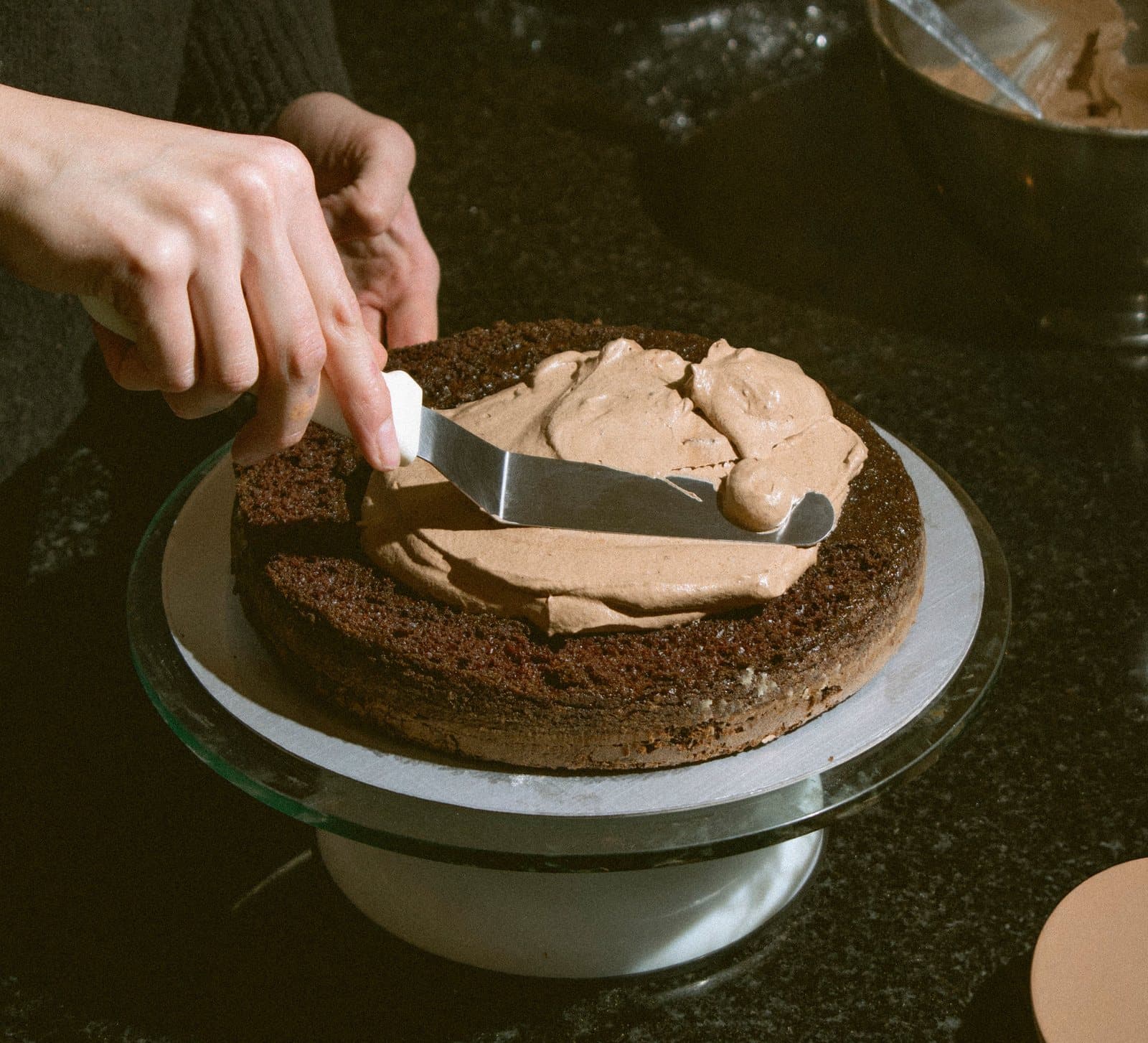
How to Decorate a Cake at Home: 10 Beginner-Friendly Techniques
You don't need a full piping-tip set or professional training to make a homemade cake look finished. Ten realistic techniques, starting with the tools that actually matter.