How to Decompress After a Stressful Day: 10 Healthy Ways to Reset

You walk through the door, and your body is home while your mind is still in the meeting that ran long. Many people spend the first hour of the evening replaying the day, scrolling, or snapping at whoever happens to be nearby. That isn't a character flaw. It's what happens when there's no clear moment between 'work' and 'home'.
A short, deliberate reset creates that moment. The ideas below are all small and practical, and you only need a few of them. Use this as a menu, not a checklist, and it's general wellness information rather than medical advice.
Why a Transition Helps
Commutes used to do some of this work automatically. Now many people move from a desk to a couch in ten steps, or carry the day in through their phone. Without a boundary, stress from the day tends to leak into the evening and then into sleep.
A reset doesn't have to be long or elaborate. It just needs to be consistent enough that your body starts to treat it as a signal: the day is over, and you're allowed to put it down.
Change How Your Body Feels
Physical resets are often the fastest, because a tense body keeps the mind on alert.
- Take a ten-minute walk. The National Institute of Mental Health says 30 minutes of walking a day can boost mood and improve health, and the CDC counts physical activity among its stress-management tips. A short walk to clear your head has a simple version built for right after work.
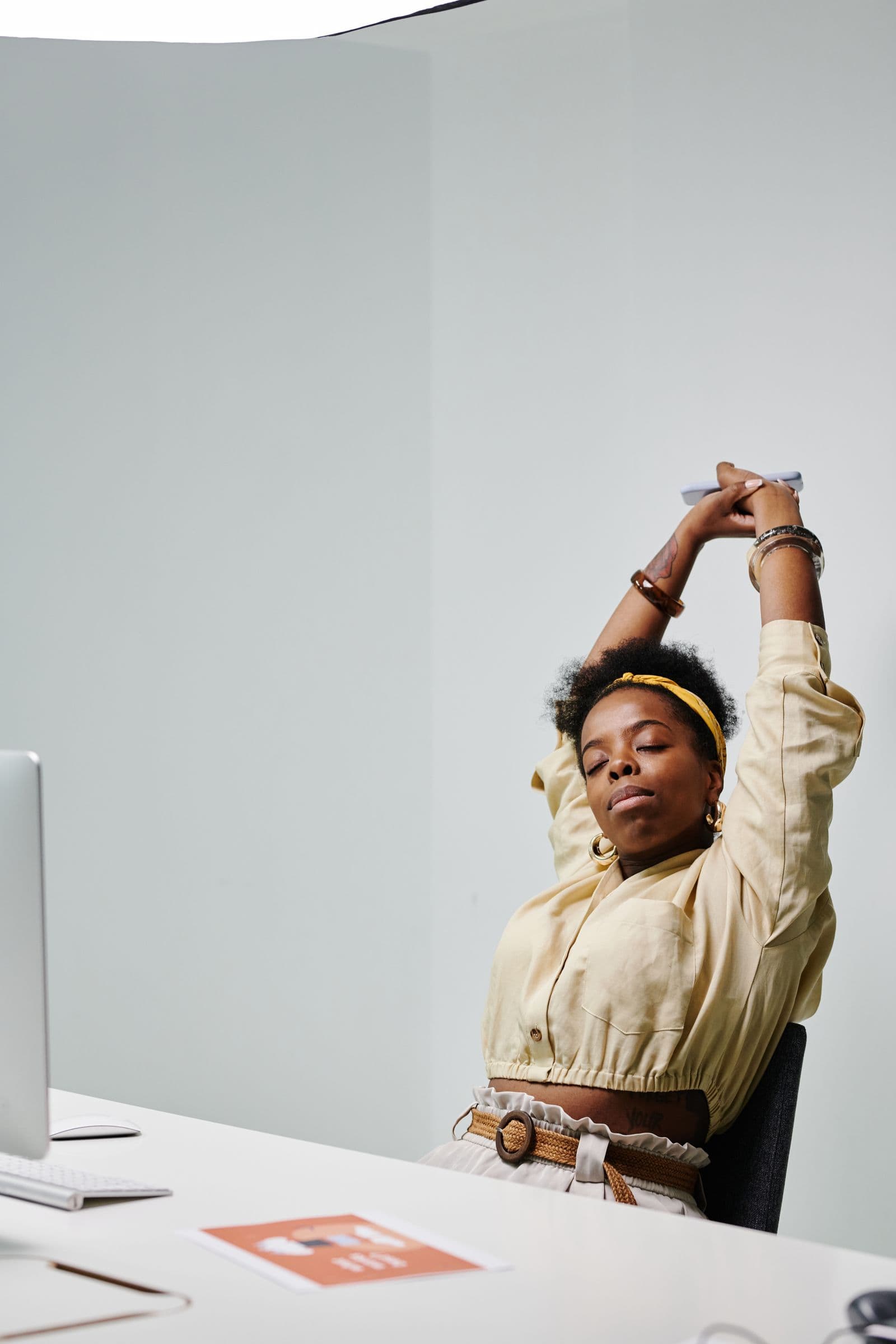
- Stretch for five minutes. The CDC lists stretching as a relaxation technique, and loosening your neck, shoulders, hips, and back is often where the day's tension collects.
- Change your clothes or take a shower. It's a small ritual that many people find marks the end of the workday, and it costs nothing.
- Slow your breathing for a minute or two. NCCIH describes slow, deep breathing as a simple relaxation technique. See simple breathing exercises to calm down.
Change What You're Taking In
After a stressful day, your attention is usually already spent, and what you feed it next matters.
- Turn off the news and social feeds for the first hour. The CDC's stress guidance is to limit news and social media consumption.
- Put on music you like, or something calm. The National Institute of Mental Health includes music among relaxation activities.
- Spend a few minutes outside, on a porch, a balcony, or a short loop around the block. The CDC includes time outdoors among its suggestions.
Connect, Briefly and Deliberately
The CDC suggests talking with people you trust about your concerns, and the National Institute of Mental Health encourages reaching out to friends or family for support. You don't need a long conversation. Telling one person, 'today was rough, and here's why', can take some of the weight off. If you live with others, agree on a short decompression window first, then talk about the day. It often goes better than starting the moment someone walks in.
Close the Loops on the Day
Unfinished business is what keeps the mind replaying the day. Two small habits can help you put it down.
- Write a two-minute closing note: what happened, what's still open, and the first thing you'll do tomorrow. Keeping a journal is on both the CDC's and NIMH's stress-management lists, and journaling for beginners explains how to start.
- Tidy one small area, such as the kitchen counter or your bag by the door. Many people find one visibly finished thing is a small relief.
Eat Something Real and Keep Alcohol Out of the Job
The National Institute of Mental Health suggests eating healthy, regular meals as part of managing stress, and a simple dinner is a decompression step in itself.
It's tempting to use alcohol as the reset. The CDC's stress guidance suggests limiting it, and its sleep tips include avoiding alcohol before bedtime. If a drink is part of your evening, it's worth noticing whether it's helping you relax or just delaying the reset.
A Sample 20-Minute Reset
Here's one way to combine the ideas above. Swap anything that doesn't suit your evening.
- 0–3 min: change clothes, drink some water, and put your phone somewhere you can't scroll it
- 3–13 min: walk around the block or step outside, with music if you like
- 13–16 min: two or three minutes of slow breathing or stretching
- 16–20 min: write a short closing note for the day, then start dinner or your evening plans
Common Ways the Reset Goes Wrong
A few patterns tend to undercut an evening reset, and they're worth noticing in yourself without judgment.
- Going straight from work to chores or errands with no pause in between, so the stress never gets a chance to settle
- Using the phone as the reset: scrolling feels like a break but often carries the day's stress with it, especially if the feed is news or work-adjacent
- Making the reset too ambitious. A 90-minute routine that never happens is worse than a 10-minute one you keep
- Waiting until you feel stressed enough to justify it. A short reset works better as a routine than as a reward
Protect the Next Day Too
A good decompression habit protects your sleep, and good sleep makes the next stressful day easier to handle. The CDC says adults need 7 or more hours a night and recommends going to bed and waking at the same time each day. If work bleeds into your evenings, it also helps to work on the boundary itself, which is covered in work-life boundaries when working from home.
Frequently Asked Questions
Decompressing is less about doing something impressive and more about marking the end of the day: move your body, change what you're taking in, connect briefly, close the loops, and eat something real. Pick two or three ideas, run them in about twenty minutes, and repeat until your body learns the signal. If evenings stay hard for weeks, that's worth mentioning to a professional.
When to Get Support
A hard day now and then is normal. If you find it difficult to unwind most evenings, or if your sleep, mood, or appetite has been affected for two weeks or more, consider talking with a doctor or a licensed mental health professional. NIMH's guide explains how to find help.
Sources
- CDC — Managing Stress
- National Institute of Mental Health — Caring for Your Mental Health
- National Institute of Mental Health — I'm So Stressed Out! Fact Sheet
- CDC — About Sleep (sleep needs and tips for better sleep)
- NCCIH (NIH) — Relaxation Techniques: What You Need To Know
General wellness information, not medical advice. Talk with a qualified healthcare professional about your own situation.
If you want a ready-made set of calming evening habits, the Mental Wellness Guide includes calm-habit routines you can repeat daily, with a matching planner and 30-day system.
Explore the Mental Wellness GuideRelated Articles

Work-Life Boundaries When You Work From Home: How to Switch Off
When your kitchen table is also your desk, the workday has no natural end. Here's how to set boundaries that actually hold, from a shutdown ritual to what to say when a message arrives at 8 p.m.
Practical Ways to Reduce Everyday Stress in 10 Minutes or Less
You don't need a free afternoon to take the edge off a stressful day. Here are small, realistic resets you can do in two to ten minutes, and how to choose the right one.

Progressive Muscle Relaxation for Beginners: A Step-by-Step Guide
Progressive muscle relaxation means tensing and then releasing one muscle group at a time. Here's a beginner-friendly walk-through, a script you can follow, and the cautions worth knowing first.